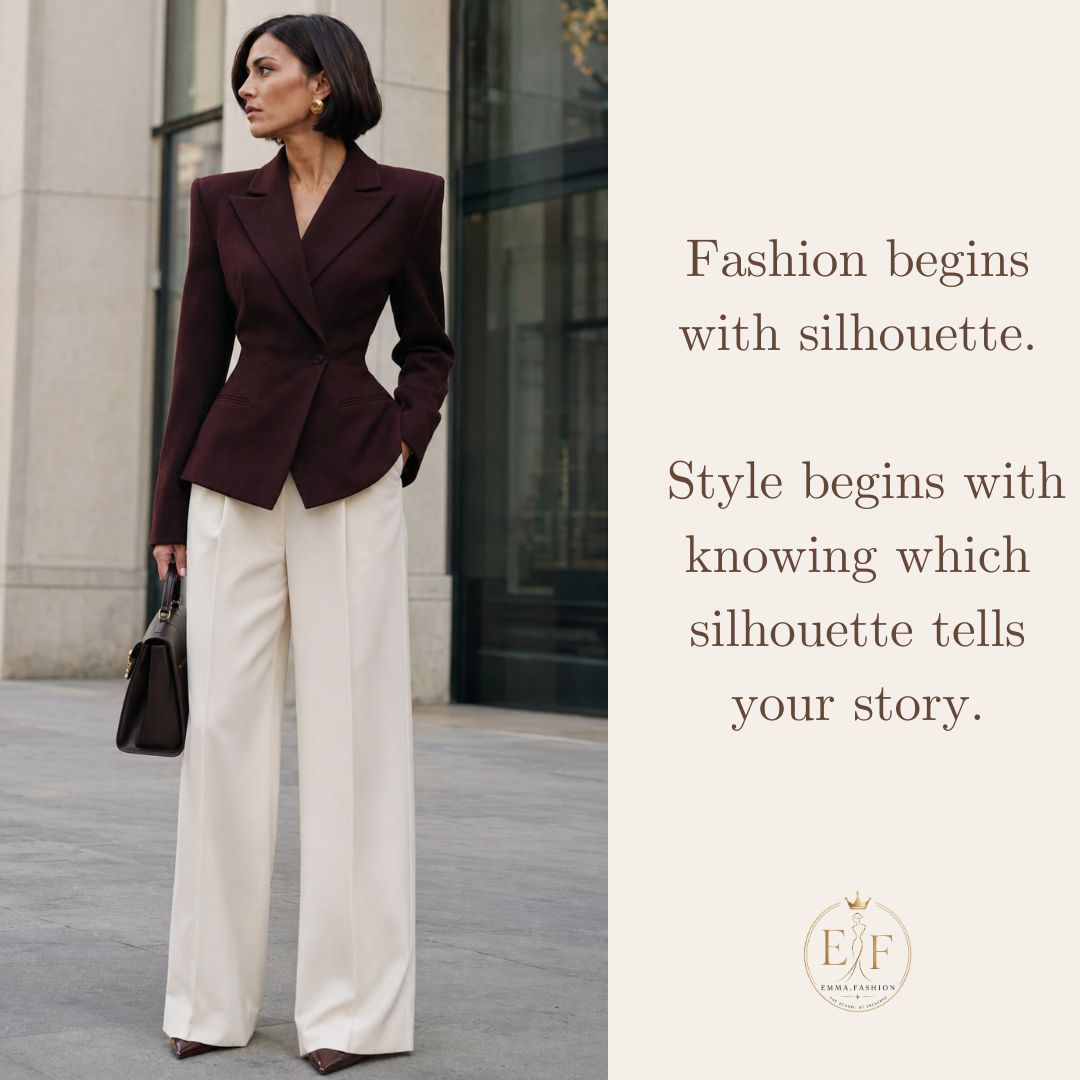
The silhouettes of Fall 2026 are expressive, architectural, and unmistakably feminine. Waists return to definition, shoulders become sharper, and volume is placed with greater intention. After seasons of generous proportions and quiet minimalism, fashion is once again asking us to notice the shape of the woman inside the clothes.
Yet a runway silhouette is only an invitation. Its true value appears when it enters real life—when a pointed shoulder accompanies you into a meeting, a dropped waist softens an evening look, or a peplum brings gentle structure to an ordinary day. The question is not simply whether a silhouette is fashionable, but whether it supports your body, your environment, and the presence you want to express.
The most elegant way to wear the Fall 2026 silhouette trends is not to reproduce them literally. It is to understand what each shape communicates, then adapt that message to your own proportions and the moment you are dressing for.
Table of Contents
- Begin With the Message of the Silhouette
- The Defined Waist
- Modern 1980s Power Shapes
- Pointed Shoulders
- The Dropped Waist
- The Softer Peplum
- The Tailored A-Line Mini
- The Deep V-Neckline
- How to Choose the Right Silhouette
- How to Wear More Than One Trend
- Frequently Asked Questions
Begin With the Message of the Silhouette
Before choosing where to wear a trend, consider what its shape communicates.
A defined waist suggests composure and femininity. A strong shoulder carries authority. A dropped waist feels elongated and quietly unconventional. A peplum introduces movement, while an A-line mini brings energy and youthfulness. A deep V-neckline creates openness and drama.
Clothing is never only material placed around the body. Its lines direct the eye, alter proportion, and influence the way we occupy a room. This is why the same trend can feel sophisticated on one occasion and misplaced on another. The difference is rarely the garment alone. It is the relationship between shape, styling, setting, and presence.
Fall 2026 offers many statement silhouettes, but statement does not have to mean spectacle. A trend becomes wearable when one defining line is allowed to speak and everything around it becomes quieter.
The Defined Waist
The defined waist is one of the season’s most adaptable directions. It can be created through tailoring, a shaped jacket, a belted coat, a fitted knit, or the strategic placement of a waistband. It does not require a tightly cinched body. What matters is that the silhouette acknowledges the waist and brings clarity to the figure.
Where to Wear It
The defined waist moves easily between professional, social, and everyday settings. For the office, choose a softly shaped blazer with straight trousers or a midi skirt. For lunch, an exhibition, or a daytime event, wear a belted cardigan or a tailored dress that follows the body without restricting it. In the evening, a column dress with subtle waist shaping creates elegance without excessive decoration.
How to Style It
The most modern interpretation feels natural rather than rigid. Choose a belt that relates to the scale of your body and the weight of the garment. A narrow belt works beautifully over a fine knit or fluid dress, while a wider belt can give purpose to a coat or substantial blazer.
If you have a shorter torso, keep the tonal contrast between the belt and garment low so the body is not visually divided. If your torso is longer, a more visible belt can create balance. The intention is definition, not compression.
Modern 1980s Power Shapes
The return of the 1980s silhouette is less about copying the decade and more about recovering its confidence. Fall 2026 combines upper-body volume with a visible waist and cleaner, more controlled proportions. The result is assertive, but not costume-like.
Where to Wear It
This silhouette is especially effective in professional environments, at conferences, presentations, creative-industry events, dinners, and occasions where you want your entrance to carry greater authority.
A structured blazer with a shaped waist can transform a simple trouser and knit combination. For an evening setting, a sculpted top with a slim skirt or fluid trousers allows the silhouette to feel expressive without becoming theatrical.
How to Style It
Balance is essential. When the upper body carries volume, let the waist remain visible and keep the lower half controlled. Straight trousers, a pencil skirt, a narrow midi skirt, or a fluid column below the hip will prevent the outfit from feeling heavy.
Avoid combining exaggerated shoulders, voluminous sleeves, a wide belt, bold jewelry, and a statement shoe in the same look. Choose the strongest element and let it establish the mood. For a deeper exploration of this fashion language, see Power Dressing: How to Wear the ’80s-Style Oversized Blazer.
Pointed Shoulders
Pointed shoulders are sharper and more architectural than conventional shoulder pads. They extend the line of the body outward and slightly upward, creating a focused, directional shape.
Because this silhouette naturally attracts attention, it is best worn when you are comfortable being visually present.
Where to Wear It
A restrained pointed shoulder can work beautifully for a leadership meeting, formal business occasion, gallery opening, fashion event, elegant dinner, or cocktail reception. In conservative workplaces, choose a subtle interpretation with a clean jacket rather than a dramatic runway angle.
For daytime, a coat with a lightly pointed shoulder can introduce the trend without demanding an entirely new wardrobe. Outerwear is often the easiest place to experiment because the structure feels purposeful.
How to Style It
Keep the neckline, hair, and jewelry considered. A clean neckline allows the shoulder line to remain visible. If the shoulders are pronounced, avoid a very wide collar or large earrings that compete for the same visual space.
Below the waist, choose simplicity: straight trousers, a fluid skirt, or a column dress. A pointed-toe shoe can echo the architecture subtly, but the rest of the accessories should remain refined.
Women with naturally broad shoulders may prefer a gentler version with less horizontal extension. The trend should create poise, not make you feel as though the garment arrives before you do.
The Dropped Waist
The dropped waist shifts the visual center of the outfit from the natural waist toward the hips. It creates length through the torso and often introduces softness or movement below the hip line.
This is a quieter trend than the pointed shoulder, yet it changes proportion just as decisively.
Where to Wear It
Dropped-waist dresses are especially suited to dinners, cultural events, weddings, cocktail occasions, and polished daytime gatherings. A knit dress with an elongated bodice can also work for a creative office or sophisticated weekend look.
For everyday wear, the silhouette can be suggested through a longline top over a softly moving skirt rather than interpreted as a literal 1920s-style dress.
How to Style It
Because the waistline sits lower, the length of the skirt and the placement of footwear become important. A midi hem with a sleek boot creates a long, uninterrupted line for fall. For evening, a pointed pump or refined slingback adds lightness.
If a dropped waist makes the legs appear shorter, select a version with a less dramatic drop, a shorter hem, or shoes close in color to the hosiery. A gentle vertical neckline or long pendant can also reinforce the elongated effect.
This silhouette should skim rather than cling at the hip. Its beauty comes from the transition between the long torso and the movement below it.
The Softer Peplum
The Fall 2026 peplum is more fluid than the stiff, sharply flared versions of the past. It may appear as a soft fold, a curved jacket hem, a draped knit, or a subtle release of volume from the waist.
Its appeal lies in the way it defines and softens at the same time.
Where to Wear It
A restrained peplum works particularly well for professional lunches, office presentations, dinners, holiday gatherings, and special occasions. A tailored peplum jacket with trousers feels composed for work, while a draped peplum top with a long skirt has a more romantic evening quality.
How to Style It
Pair the peplum with a clean lower silhouette. Straight-leg trousers, a narrow midi skirt, or a column skirt allow the waist detail to remain intentional. If the peplum is fuller, avoid adding volume at the hip through cargo pockets, heavy pleats, or an equally flared bottom.
Placement matters. The peplum should begin where you want definition and end without cutting across the fullest part of the hip. Trying several lengths is often more revealing than focusing on size alone.
The Tailored A-Line Mini
The A-line mini brings a crisp, youthful energy to fall. Its tailored construction keeps it polished, while the slight flare creates movement and makes it easier to wear than a very fitted short skirt.
The sophistication of this silhouette depends largely on proportion and context.
Where to Wear It
It works well for weekends in the city, informal lunches, creative workplaces, gallery visits, travel, and evenings out. In a traditional office or formal daytime environment, a longer A-line skirt will usually communicate greater appropriateness while preserving the same shape.
How to Style It
For fall, balance the shorter hem with coverage elsewhere. Wear it with opaque tights, a fine turtleneck, a tailored jacket, and a knee-high boot or refined loafer. The effect should feel intentional and seasonally grounded.
Choose a mini length that allows you to sit, walk, and move without constant adjustment. Elegance depends not only on how a garment looks while you are standing before a mirror, but on how calmly you can live in it.
If the skirt is short, avoid combining it with a deeply revealing neckline and an exaggerated heel for daytime. Let one area of the body hold the focus.
The Deep V-Neckline
The deep V-neckline lengthens the neck and torso while creating a strong vertical line. It may appear in dresses, blouses, knitwear, waistcoats, or sharply tailored jackets.
It can feel powerful, sensual, or refined depending on what is layered beneath it and where it is worn.
Where to Wear It
For evening dinners, cocktail events, and formal occasions, a deep V can stand on its own when the fit is secure and the surrounding design is restrained. For the office, professional gatherings, or daytime events, layer it over a silk camisole, fine knit, or discreet insert.
A V-neck waistcoat over a blouse can introduce the trend in a polished way, while a deep-V sweater over a crisp shirt gives it a practical weekend interpretation.
How to Style It
The neckline should remain stable when you move, sit, and lean forward. Fashion tape or discreet tailoring may be useful for evening garments, but the most elegant choice is always a cut that allows you to forget about it once dressed.
Keep necklaces delicate or omit them altogether when the V is already dramatic. A longer face or neck may benefit from a softer, slightly wider V rather than an extremely narrow plunge.
The goal is not exposure for its own sake. It is to use the vertical line to create openness and length while respecting the environment.
How to Choose the Right Silhouette
Not every trend deserves a place in every wardrobe. The right silhouette is the one that creates a relationship between contemporary fashion and your own identity.
Begin with three questions:
- Does this shape support my natural proportions or give me a balance I enjoy?
- Can I move through my real life comfortably and confidently in it?
- Does its message belong in the setting where I plan to wear it?
Your answers matter more than the popularity of the trend.
Try each silhouette as a whole outfit rather than judging the garment in isolation. Put on the shoes, outer layer, and accessories you would genuinely wear. Sit down. Walk. Look at the outfit from the side and back. Notice not only whether it flatters you, but whether your body becomes tense or at ease.
This is where personal style begins to guide fashion. A trend may be beautiful and still not be yours. Another may surprise you because it gives visible form to a confidence that was already emerging.
How to Wear More Than One Trend
Several Fall 2026 silhouettes can coexist, but they need hierarchy.
A defined-waist blazer may also have a pointed shoulder. A dropped-waist dress may finish in a soft A-line. A peplum jacket can carry an echo of 1980s power dressing. The look remains elegant when one feature leads and the others support it.
If the shoulder is dramatic, keep the waist treatment clean. If the peplum has generous movement, choose a quieter neckline. If the skirt is short, add visual substance through tights, boots, and refined outerwear. If the neckline is deep, let the rest of the silhouette offer composure.
Color can also calm complexity. Wearing an architectural silhouette in navy, espresso, charcoal, camel, or winter white makes it easier to integrate into an existing wardrobe. Texture then brings depth: wool, suede, silk, leather, and fine knitwear allow a monochromatic look to feel rich rather than flat.
For more ideas on translating seasonal fashion into a polished professional wardrobe, read How to Elevate Your Fall Style and Look Professional.
The most successful interpretation will never feel like a collection of trends. It will feel like one woman, clearly expressed.
Frequently Asked Questions
What silhouettes are trending for Fall 2026?
Fall 2026 emphasizes defined waists, modern 1980s power shapes, pointed shoulders, dropped waists, softer peplums, tailored A-line minis, and deep V-necklines. The overall direction combines architectural structure with feminine movement.
How can I wear pointed shoulders without looking too dramatic?
Choose a jacket or coat with one clearly defined but restrained shoulder line, then keep the neckline, accessories, and lower half simple. Straight trousers, a fluid skirt, or a column dress will balance the architecture and make it appropriate for real life.
Can I wear the Fall 2026 silhouette trends to the office?
Yes, when the shapes are adapted to the formality of your workplace. A softly defined waist, subtle shoulder structure, a restrained peplum, or a layered V-neckline can introduce the season while preserving professionalism.
What is the difference between a dropped waist and a defined waist?
A defined waist follows or emphasizes the natural waistline, while a dropped waist moves the visual focus lower toward the hips. The first highlights the body’s center, while the second lengthens the torso and changes the balance of the figure.
How do I know which fashion silhouette suits my body?
Look beyond conventional body-shape rules and notice how the garment balances your proportions, supports movement, and makes you feel. The right silhouette should allow you to stand naturally and remain present rather than constantly adjusting or becoming self-conscious.
If you would like to translate the Fall 2026 silhouettes into a wardrobe that reflects your proportions, lifestyle, and personal presence, Emma.Fashion can help you choose the shapes that feel current while remaining entirely your own.