Body language is a powerful form of non-verbal communication and plays an instrumental role in our daily interaction and communication.
It provides essential clues about our intentions, emotions, and motivations. And sometimes, it may help provide information about how we think and feel through the body postures, gestures, and movements we consciously or unconsciously make.
-
Adopt a self-confidence posture.
Lean slightly backward on the balls of the feet as you walk with your head tilt. Keep shoulders back and chest open to keep your body upward to give the impression of a confident person.
A woman looks more dominant and impressed with her posture when she walks in heels because the heels’ height gives her an upright and expansive demeanor.
-
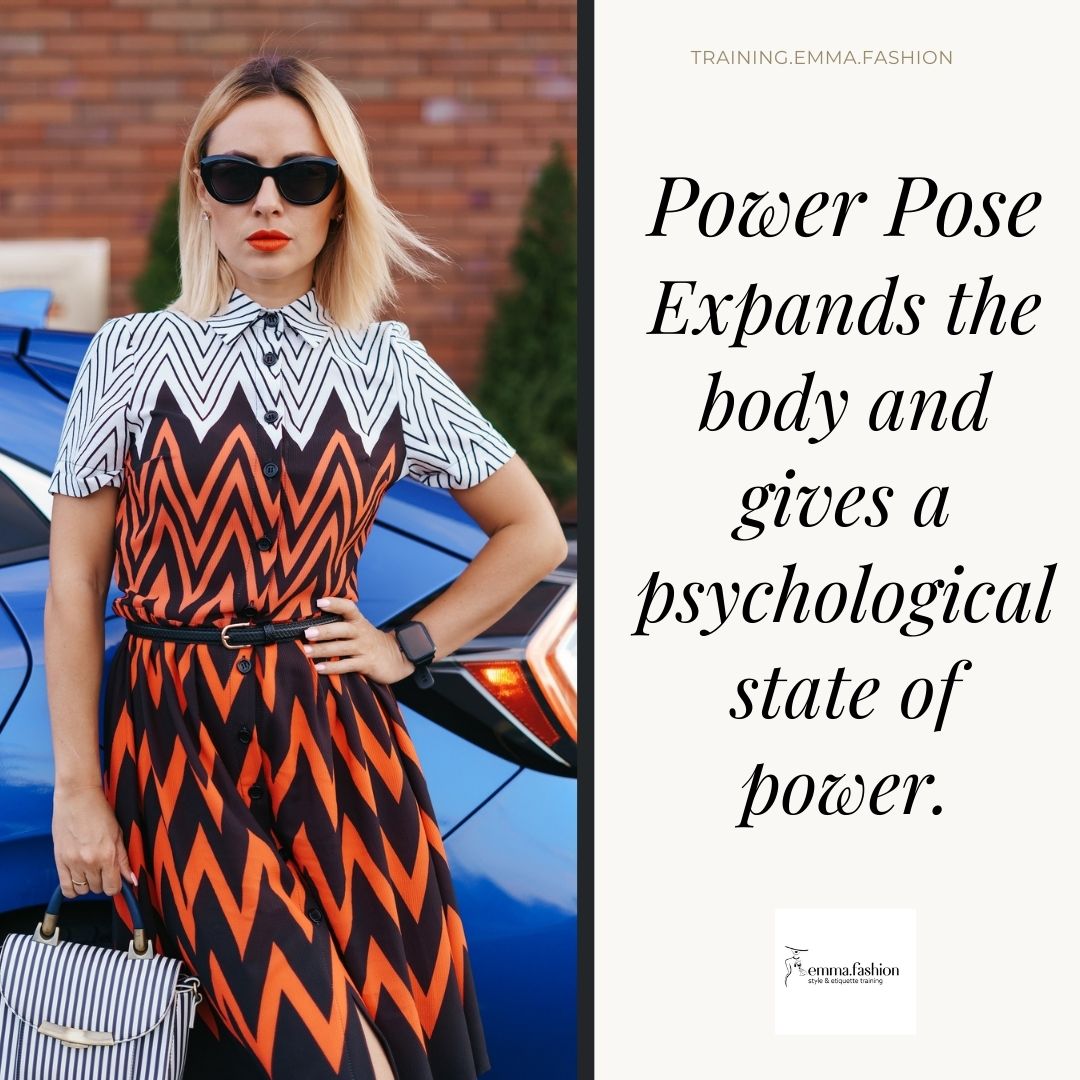
Expand your body.
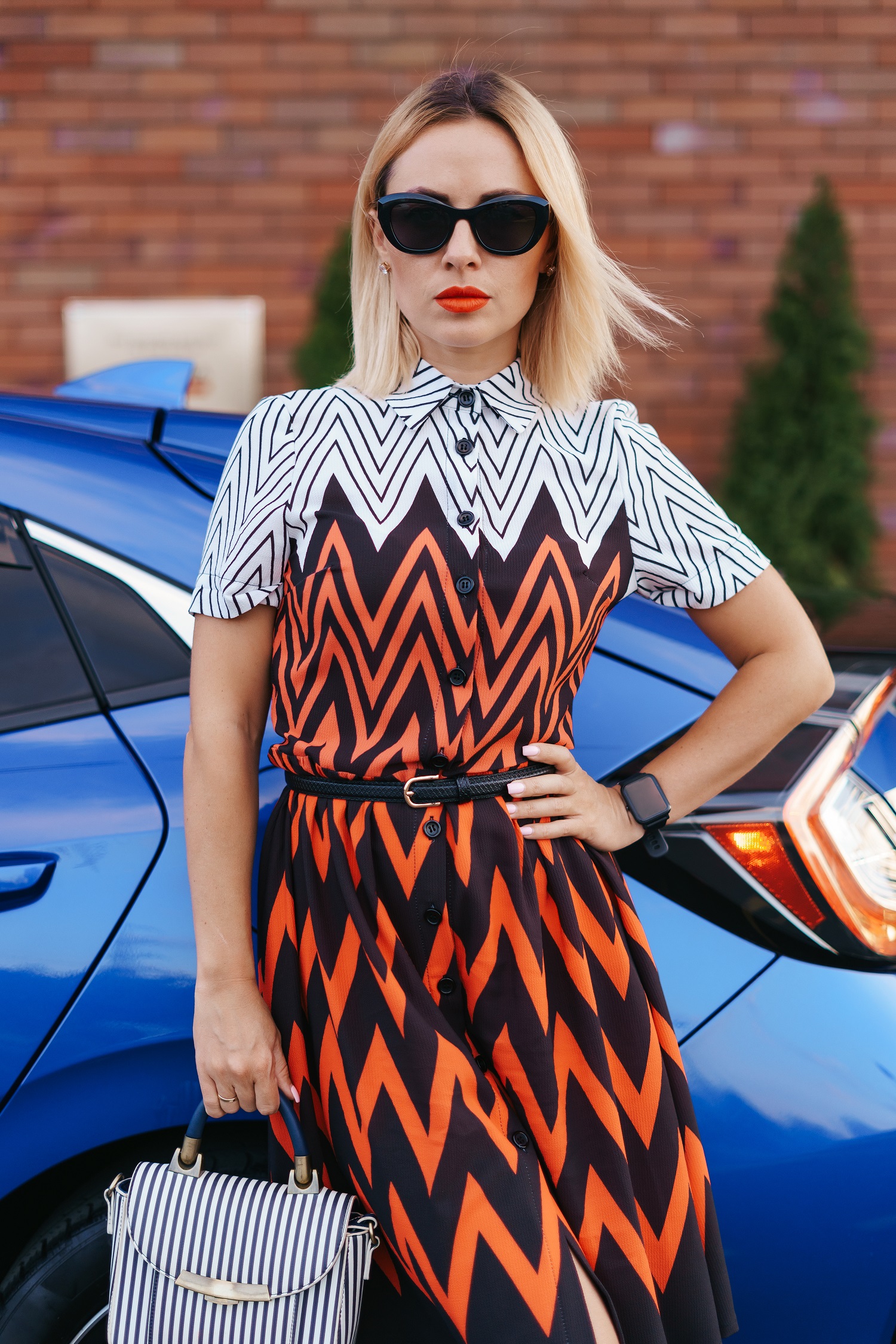
Wherever you sit, stand, or move, try to spread your arms and limbs. Take the akimbo posture – hands-on-hips with elbows turned outward and thumbs back when standing up. And when sitting, lean back on the chair with a hand behind the head that signals you are relaxed and confident.
You want to impose but show openness, so keep your arms open and feet apart and try to take more space with this power stance.
You can also be expansive when walking on the street by surrounding yourself with accessories like holding a structured bag or an umbrella.
-
Use your hands and fingers to look more expressive.
Our hands express what it’s in our mind and give powerful insights into our emotional state. The hands’ gestures and positions are the “punctuations mark” of our body posture, increasing our engagement and boosting positive feelings and reactions. When we move our hands, our body expands and unconsciously gives us a psychological state of power.
Stapled Hands
Steepling or finger tenting is the universal sign of confidence and authority.
Usually, leaders and people in power use the steepling gesture to show dominance and demonstrate control over others. But excessive use of this gesture can be interpreted as arrogance and superiority. It’s essential to manage the other body movements that follow after the steeple motion to show a positive attitude but still express authority.
Raised Steeple
For example, you can use the raised steeple by raising your fingers in front of your chest when giving your opinions. But avoid this gesture when you want to gain confidence or try to be persuasive.
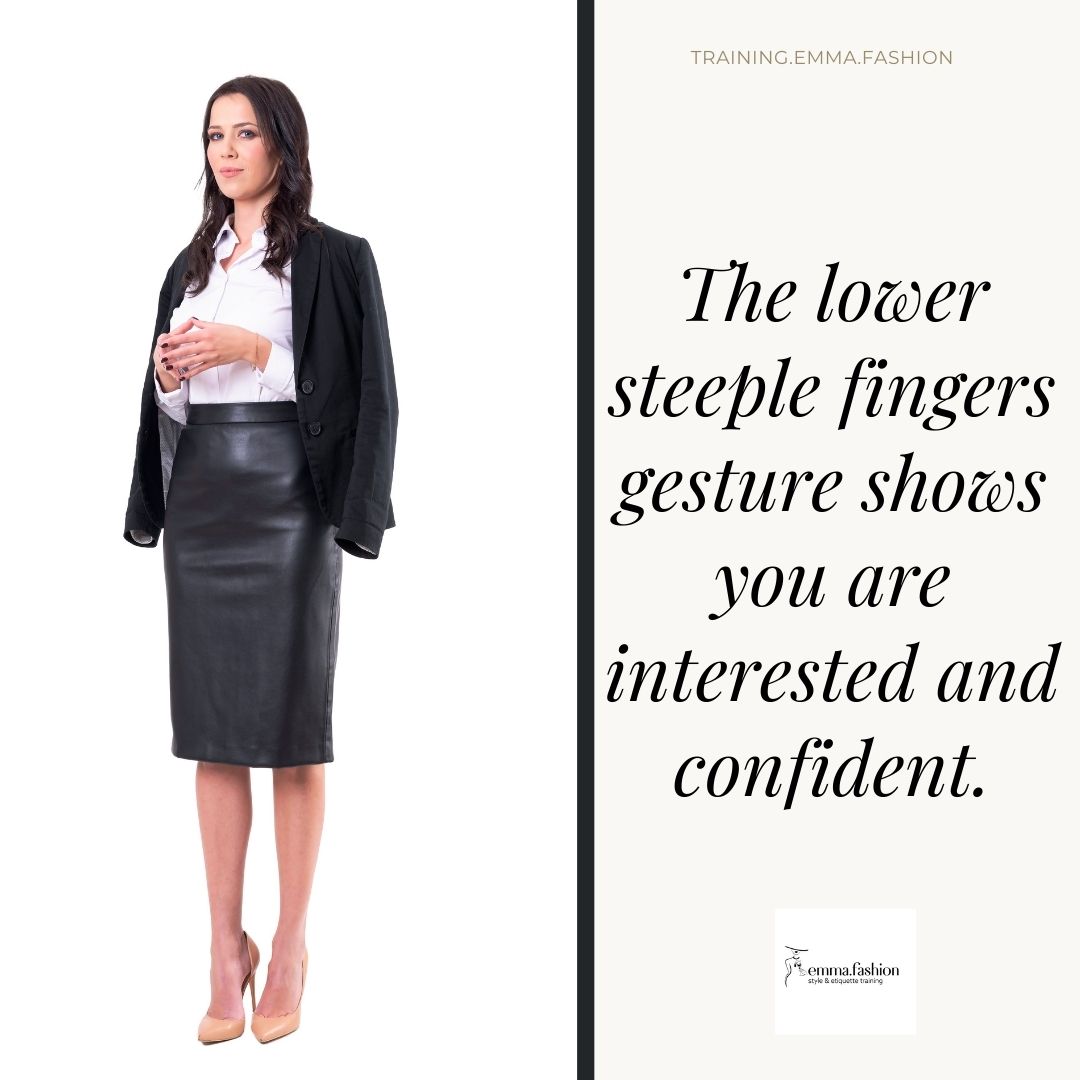
Lower Steeple
The lowered steeple position is more effective when you listen, and women adopt this gesture often to demonstrate their interest and to indicate confidence in their knowledge.
If the steeple fingers follow a series of other positive gestures, you will more likely give positive feedback. But if the steepled motion follows a series of negative gestures, then you may look confident, but you may disagree with the other person. So, in both cases, the steeple fingers show confidence, but one has a positive outcome and the other negative effect.
The steepling gesture is more a finish posture that accentuates your body language and conveys your intention. Therefore, the hands’ movement should coordinate with the other body movements and gestures to reveal your attitude.
Frequently Asked Questions
How can body language make me look more confident?
Adopt a self-confident posture by leaning slightly back on the balls of your feet as you walk, keeping your shoulders back and chest open so your body stays upright. Heels can enhance this effect, giving a woman an upright, expansive demeanor that reads as more dominant and impressive.
What is a power pose and how do I use it?
A power pose means expanding your body to take up more space: stand akimbo with hands on hips, elbows out and thumbs back, or lean back in your chair with a hand behind your head to signal you are relaxed and confident. Keep your arms open and feet apart so you impose presence while still showing openness.
What does the steepling hand gesture mean?
Steepling, or finger tenting, is the universal sign of confidence and authority, often used by leaders to demonstrate control. Use it sparingly, though, because excessive steepling can be read as arrogance and superiority, and it should coordinate with your other gestures to convey a positive attitude.
When should I use a raised steeple versus a lowered steeple?
Use the raised steeple, fingers up in front of your chest, when giving your opinions, but avoid it when you are trying to gain confidence or be persuasive. The lowered steeple works better when listening, and women often adopt it to show interest and confidence in their knowledge.
Why do hand gestures matter when speaking?
Hands express what is in our mind and act as the punctuation marks of our body posture, increasing engagement and boosting positive reactions. When we move our hands, our body expands, which unconsciously gives us a psychological state of power.