In today’s fast-paced world, where communication happens at the click of a button, the importance of manners and etiquette cannot be overstated. However, there’s a fine line between being polite and being manipulated and understanding this relationship is crucial to maintaining healthy relationships and interactions.
Is Manipulation Considered Rudeness?
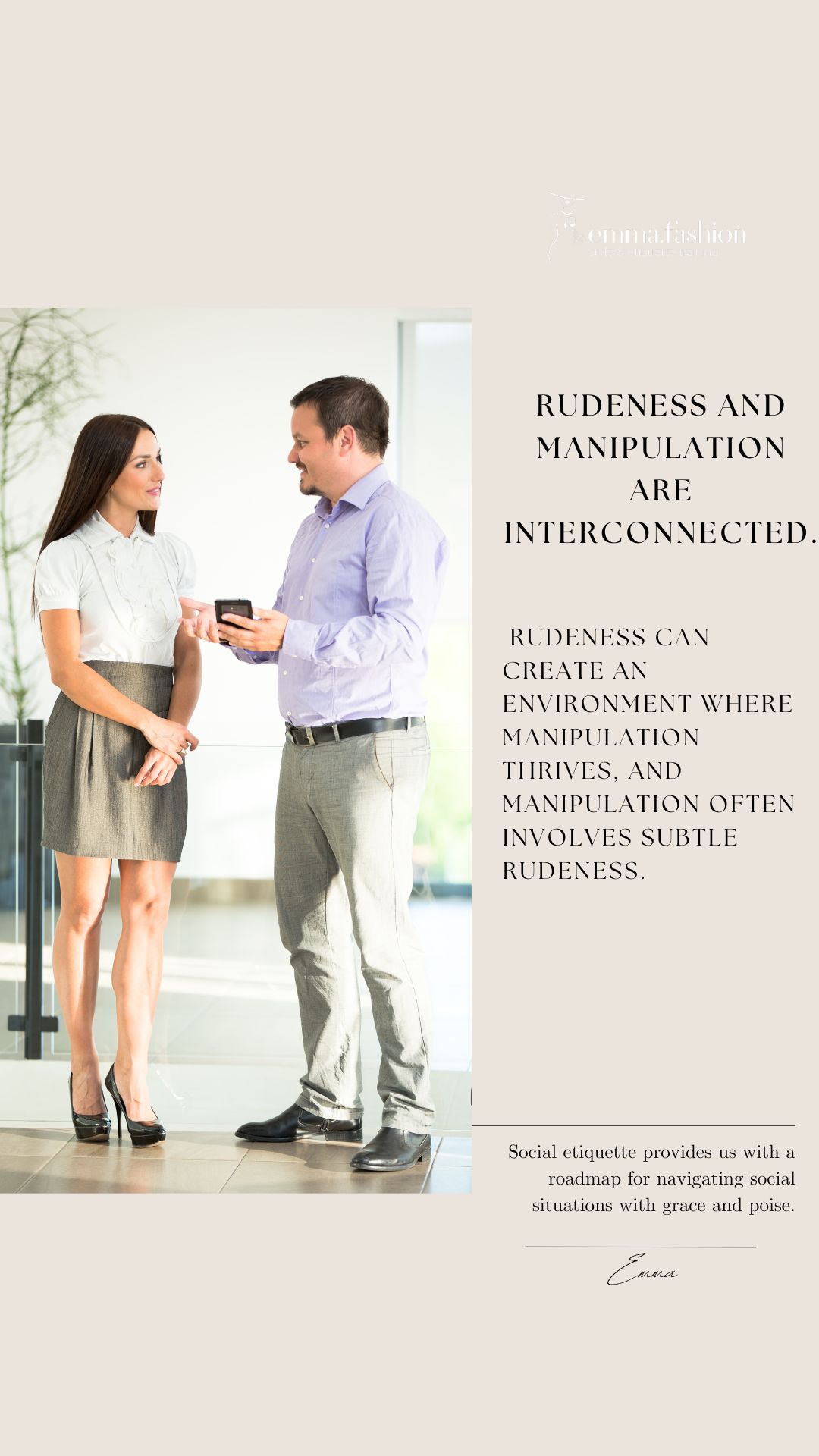
Manipulation, by its very nature, involves using tactics to control or influence someone else’s behavior or thoughts for personal gain. While not always overtly rude, manipulation often involves subtle or deceptive tactics that can be harmful and disrespectful. In this sense, manipulation can certainly be considered a form of rudeness, as it disregards the autonomy and feelings of others.
Does Rudeness Lead to Manipulation?
Rudeness, on the other hand, can be a precursor to manipulation. When someone consistently displays rude behavior, they may resort to manipulation to get what they want. Rudeness can create a toxic environment where healthy communication and boundaries are ignored, making it easier for manipulative behavior to thrive.
The Role of Manners and Etiquette
Manners and etiquette play a vital role in preventing rudeness and manipulation in our interactions. By adhering to basic principles of respect, kindness, and consideration, we create an environment where manipulation is less likely to occur.
The Importance of Setting Boundaries
One of the best defenses against manipulation is establishing clear boundaries in our relationships and interactions. Communicating our needs and expectations openly and assertively makes it more difficult for others to manipulate or take advantage of us.
While rudeness and manipulation are not synonymous, the two have a clear relationship. We can create relationships built on respect, trust, and mutual understanding by focusing on manners, etiquette, and healthy communication.
Frequently Asked Questions
Is manipulation a form of rudeness?
Manipulation involves using tactics to control or influence someone else for personal gain, and while it is not always overtly rude, it often relies on subtle or deceptive tactics that are harmful and disrespectful. In that sense it can certainly be considered a form of rudeness, because it disregards the autonomy and feelings of others.
Can rude behavior lead to manipulation?
Yes, rudeness can be a precursor to manipulation. When someone consistently behaves rudely, they may resort to manipulation to get what they want, and rudeness creates a toxic environment where healthy communication and boundaries are ignored, making it easier for manipulative behavior to thrive.
How do good manners protect me from being manipulated?
Manners and etiquette play a vital role in preventing both rudeness and manipulation. By adhering to basic principles of respect, kindness, and consideration, we create an environment where manipulation is simply less likely to occur.
What is the best defense against manipulative people?
One of the best defenses is establishing clear boundaries in your relationships and interactions. When you communicate your needs and expectations openly and assertively, it becomes far more difficult for others to manipulate or take advantage of you.