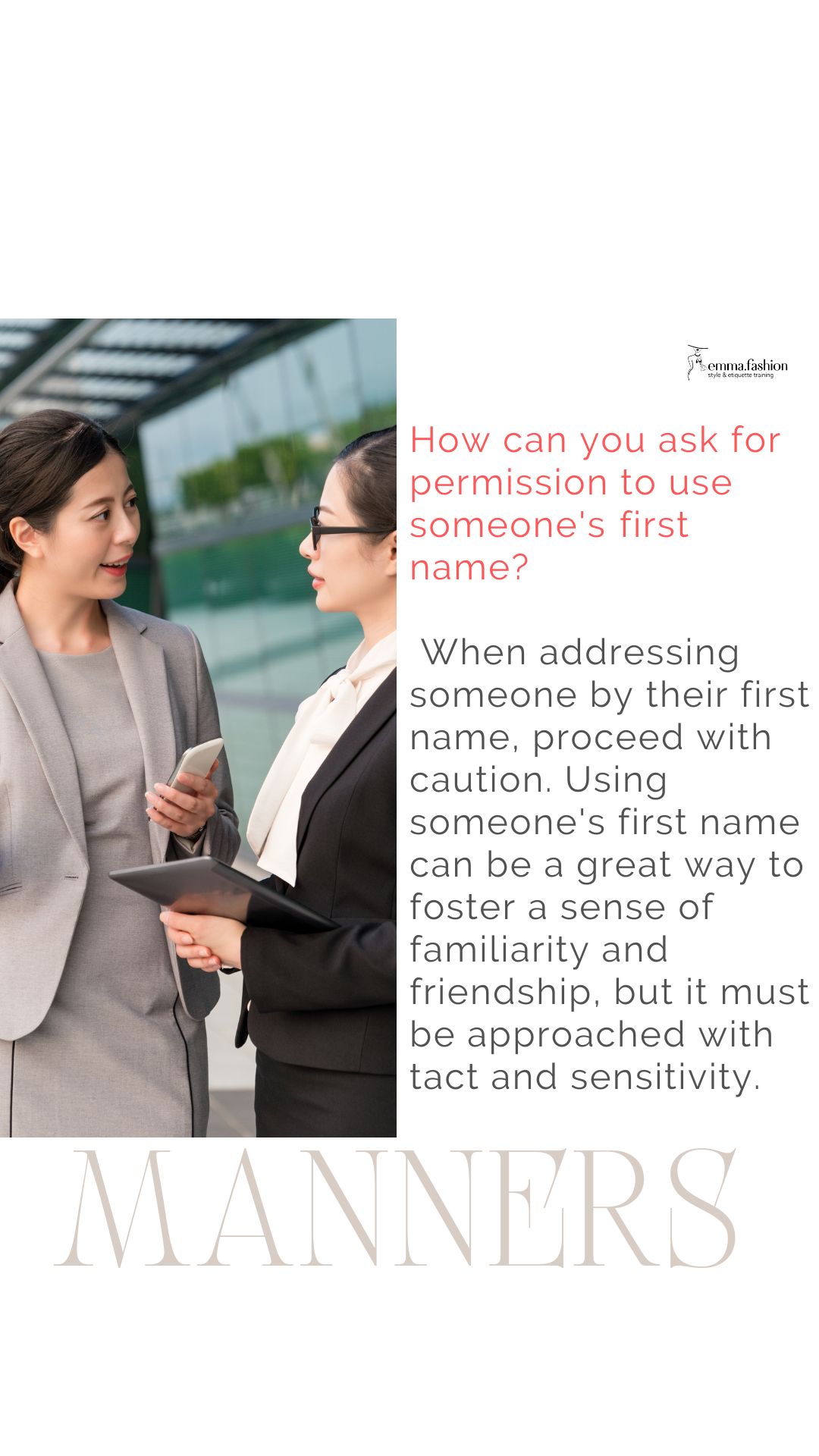
In our generally laid-back society, starting with the use of a title as a form of address is often a safe and considerate practice. However, addressing someone by their first name can foster a warmer connection and a sense of closeness. Still, this shift should be handled delicately, especially when moving away from more formal modes of address. Keep in mind that not everyone may readily embrace informality, so it’s vital to assess the individual’s comfort level and be mindful of any cultural or workplace customs that may influence your approach. Ultimately, the key is to make this transition with respect and a keen awareness of the other person’s preferences.
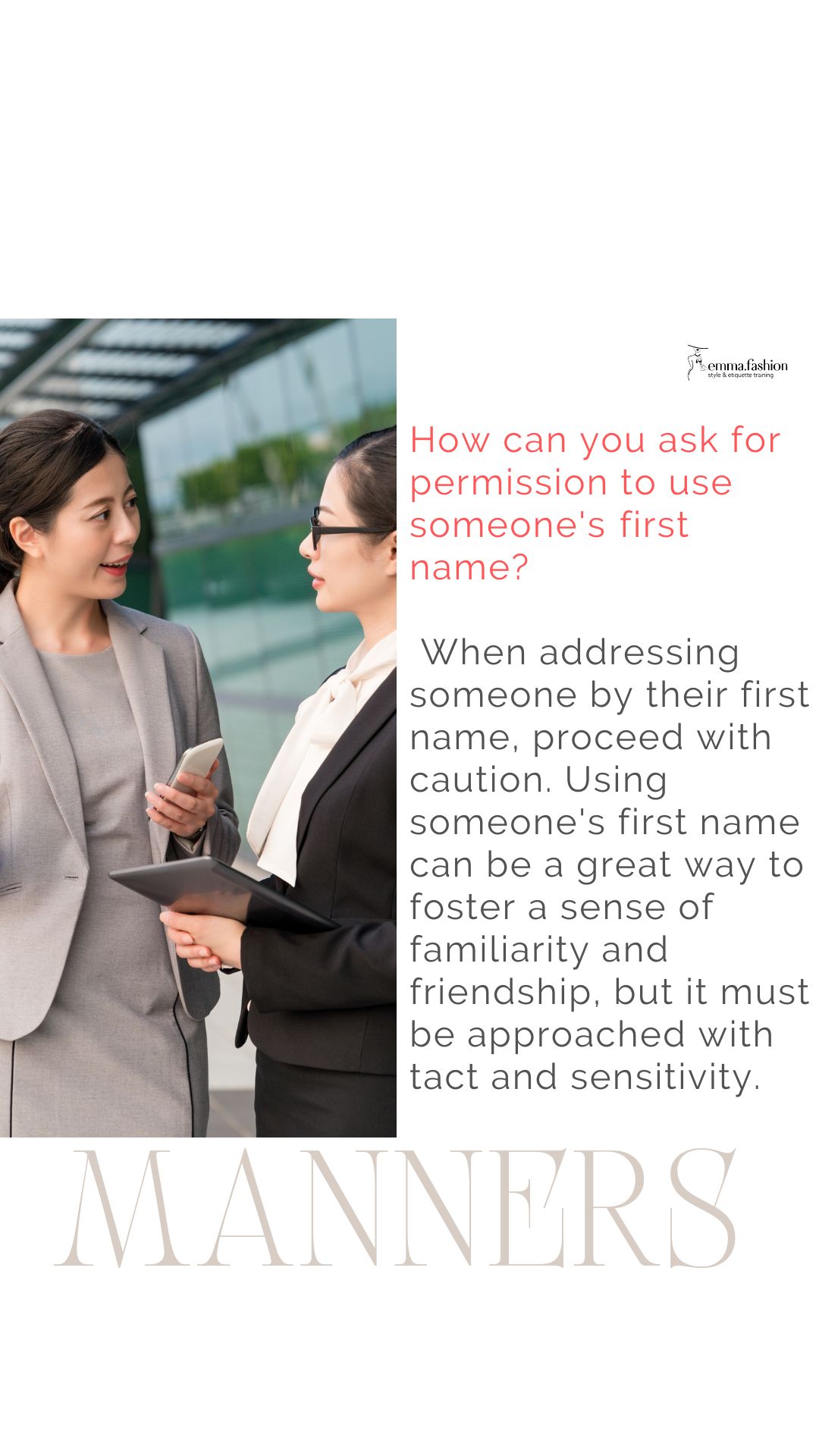
How can you ask for permission to use someone’s first name?
Asking permission to use someone’s first name is a polite and respectful way to approach a more informal level of address, especially in professional or unfamiliar settings.
Establish Rapport
Before asking for permission, try to establish a comfortable rapport with the person through polite conversation and active listening. This can make the transition to a first-name basis smoother.
Express Interest
Show your interest in getting to know the person better by saying something like, “I’ve enjoyed our conversation, and I’d like to address you by your first name if that’s all right with you.”
Ask for Permission Directly
Politely ask for permission. You can say, “May I call you [First Name]?” or “Would it be okay if I address you as [First Name]?”
Respect Their Response
Regardless of their answer, respect their preference. If they agree, express your gratitude, and if they decline, continue using their title or last name as appropriate.
Use Their Name Consistently
Once you have their permission, be consistent in using their first name in your interactions. This demonstrates that you respect their choice.
Observe Context
Be mindful of the context and setting. In some professional situations or cultures, using first names may not be appropriate, even with permission.
Addressing someone by their first name can foster a sense of familiarity and camaraderie, but it must be approached with tact and sensitivity, particularly when transitioning from more formal modes of address. The most important thing to remember when addressing someone by their first name is that you want to make sure it’s appropriate to do so.
Frequently Asked Questions
Is it rude to call someone by their first name right away?
In our generally laid-back society, starting with a title is often the safe and considerate practice, because not everyone readily embraces informality. Assess the person's comfort level and be mindful of cultural or workplace customs before moving to a first-name basis.
How do I politely ask to use someone's first name?
Establish a comfortable rapport first, then ask directly and politely with something like, May I call you by your first name, or would it be all right if I address you that way. You can also express interest by saying you have enjoyed the conversation and would like to use their first name if they are comfortable with it.
What if someone declines when I ask to use their first name?
Respect their preference regardless of the answer. If they agree, express your gratitude and then use their first name consistently, and if they decline, simply continue using their title or last name as appropriate.
Are there situations where first names are inappropriate even with permission?
Yes, context matters; in some professional situations or cultures, using first names may not be appropriate even after permission has been given. The most important thing is to make sure the informality suits the setting, and to approach the transition with tact and sensitivity.