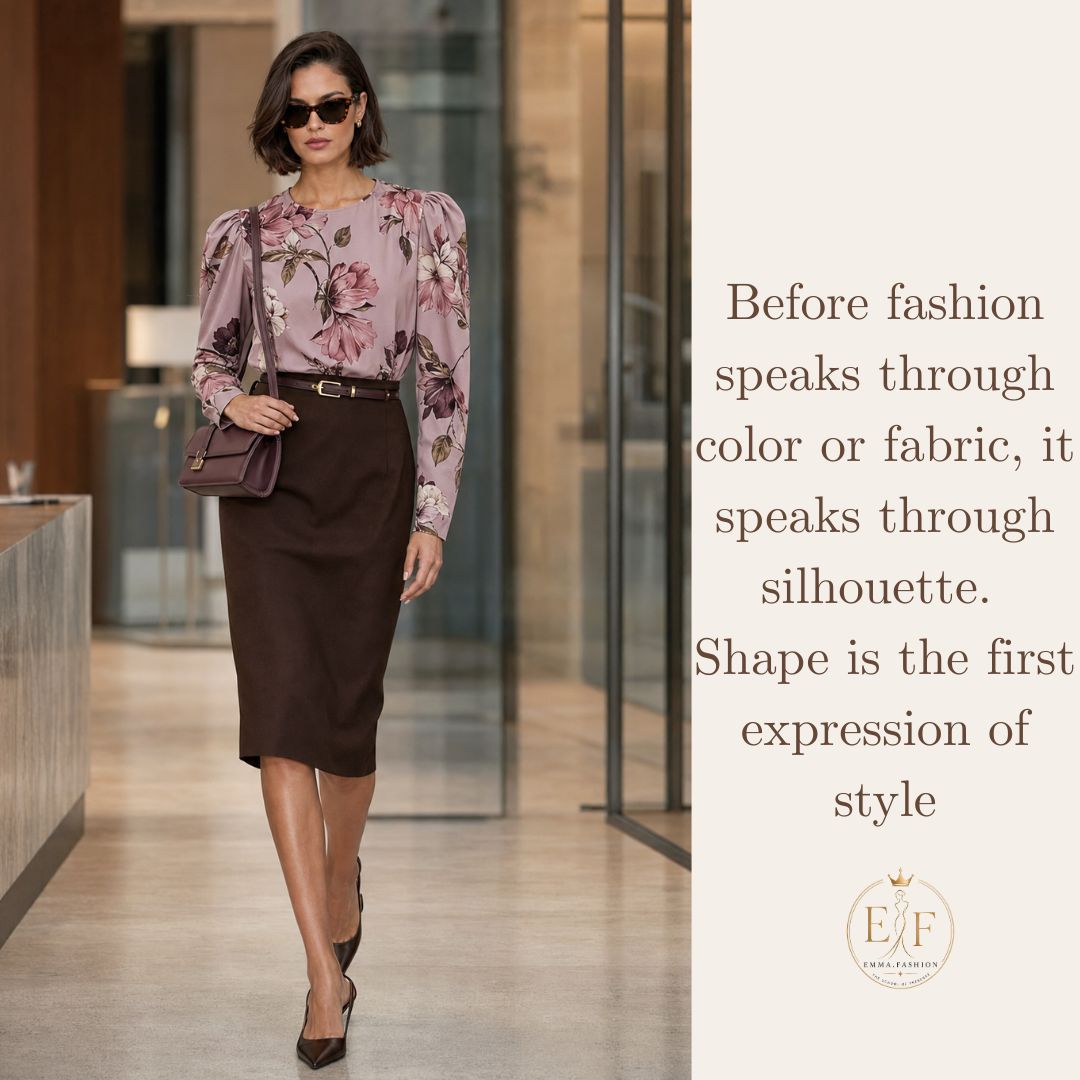
Fashion is not only about what appears on the runway. It is also about learning how to read shape, proportion, fabric, and cultural mood—and then deciding what belongs in your own wardrobe. The Fall/Winter 2026–2027 collections suggest a renewed interest in silhouettes that feel expressive, structured, and emotionally present.
After several seasons dominated by ease and oversized volume, the body is becoming visible again—not through restriction, but through intention. Waists are defined, shoulders become architectural, hemlines shift, and fluidity is balanced by precision. The season does not ask women to abandon comfort. It asks us to give comfort a clearer form.
The most useful way to approach these trends is not to copy an entire runway look. It is to understand what each silhouette communicates, how it changes proportion, and how it may be interpreted in a way that remains aligned with your life and personal style.
Table of Contents
- The Return of the Defined Waist
- Modern 1980s Power Silhouettes
- Pointed Shoulders and Architectural Presence
- The Dropped Waist
- The Softer Peplum
- The Tailored A-Line Mini
- The Deep V-Neckline
- How to Translate Runway Silhouettes Into Real Life
- What These Silhouettes Reveal About the Season
- Frequently Asked Questions
The Return of the Defined Waist
One of the clearest directions for Fall/Winter 2026–2027 is the return of the waist as a central point of the silhouette. After years of loose layers and deliberately oversized forms, designers are once again drawing the eye toward the middle of the body.
This does not mean that every garment must be fitted or that the waist must be tightly cinched. A waist can be suggested through the cut of a jacket, the placement of a seam, a shaped knit, a wrap closure, or the quiet addition of a belt. What matters is the sense of proportion it creates.
A defined waist brings structure to volume. It allows a generous shoulder, a full skirt, or a fluid trouser to feel deliberate rather than overwhelming. The effect is feminine, but not fragile; polished, but not rigid.
For everyday dressing, this may appear through a belted coat, a softly tailored blazer, a tucked knit, or a dress whose shape follows the body without clinging to it. The goal is not to make the body conform to a trend. It is to use proportion to create clarity.
Modern 1980s Power Silhouettes
The influence of the 1980s returns through strong upper-body volume, visible waists, and confident tailoring. Yet this is not simply a revival of the exaggerated power suit. The contemporary interpretation is cleaner, more controlled, and more aware of balance.
Volume may appear in a sculpted sleeve, a broader shoulder, or a jacket that creates presence above the waist. Below it, the line often becomes narrower or more fluid. This contrast gives the silhouette authority without allowing it to become costume.
The original power dressing of the 1980s helped women claim visual space in professional environments. Its return carries a similar psychological message, but with greater freedom. Strength is no longer expressed only through severity. It can coexist with softness, movement, and sensuality.
To wear this direction with ease, choose one element of emphasis. A strong-shouldered jacket may be balanced with straight trousers, a column skirt, or a simple dress. When the silhouette already communicates confidence, the remaining details can be restrained.
Pointed Shoulders and Architectural Presence
Among the more dramatic expressions of the season, pointed shoulders push tailoring into an architectural form. Unlike the rounded or heavily padded shoulders of previous decades, these lines can feel sharper, more angular, and intentionally directional.
Shoulders frame the body and influence how a person enters a room. A precise shoulder line can create composure before any accessory is added. It suggests decisiveness, presence, and a willingness to be seen.
Because the shape is visually strong, it benefits from simplicity elsewhere. A clean jacket with pointed shoulders can be worn over a fine knit and paired with fluid trousers. A sculpted coat can sit above an uncomplicated dress. The contrast between architecture and movement prevents the look from feeling overly theatrical.
Women who prefer subtlety do not need the most dramatic version. A slightly extended or carefully angled shoulder can introduce the idea while remaining appropriate for the office, an evening event, or an elegant everyday wardrobe.
The Dropped Waist
The dropped waist shifts the visual center of a garment from the natural waist toward the hips. With references to both 1920s ease and later modernist silhouettes, it creates a longer torso and changes the familiar balance between upper and lower body.
This shape may appear in dresses, elongated jackets, tunic-like tops, or garments where fullness begins below the hip line. Its appeal lies in its quiet disruption of proportion. Rather than emphasizing the narrowest part of the body, it allows the silhouette to lengthen before opening into movement.
A dropped waist can feel refined and youthful, but it requires attention to scale. The placement of the seam, the length of the garment, and the volume below the hip all affect how harmonious it feels. The most elegant interpretation is often one in which the fabric moves rather than stands stiffly away from the body.
If the full silhouette feels unfamiliar, begin with an elongated knit or jacket over a narrow base. This creates a similar vertical line without requiring a complete change in the way you dress.
The Softer Peplum
The peplum returns with less rigidity and more natural movement. Historically associated with structured femininity—particularly in the 1940s and again in the 1980s—it now appears in fluid jackets, draped tops, and softly shaped dresses.
The modern peplum does not need to project sharply from the waist. It may fall asymmetrically, emerge through a wrap, or appear as a gentle release of fabric over the hips. This makes it easier to wear and more responsive to the body.
Its strength lies in the relationship it creates between structure and softness. The waist is acknowledged, but the silhouette is allowed to breathe. For women who appreciate feminine shapes yet resist anything overly decorative, this quieter peplum offers an elegant compromise.
Pair it with a clean lower line: tailored trousers, a pencil skirt, or a narrow midi skirt. Keeping the rest of the outfit composed allows the movement at the waist to remain the point of interest.
The Tailored A-Line Mini
The A-line mini draws from the clear geometry and youthful confidence of 1960s mod style. For Fall/Winter 2026–2027, it is reinterpreted through sharper tailoring, substantial fabrics, and precise construction.
The shape sits close at the waist or hips before moving away from the body in a clean line. It can bring lightness to heavier fall textures such as wool, suede, leather, and structured tweed. Because the silhouette is simple, fabric quality and fit become especially important.
The word “mini” does not need to imply an extremely short hem. The essential idea is the compact A-line proportion. Women who prefer more coverage can choose a version that ends just above the knee and still retain the modern effect.
For an elegant daytime look, pair it with opaque tights, refined boots, and a fine-gauge knit. A longer coat can add vertical balance, while restrained accessories keep the reference sophisticated rather than nostalgic.
The Deep V-Neckline
The deep V-neckline introduces openness into a season otherwise shaped by structure. It lengthens the neck, creates a strong vertical line, and brings a sense of sensuality that feels controlled rather than excessive.
On the runway, the V may be dramatic. In daily life, the principle can be adapted through depth, layering, and context. A V-neck knit over a silk camisole, a wrap dress, or a tailored vest over a fine blouse can create the same elongating effect with greater coverage.
Balance is essential. A lower neckline feels most refined when the rest of the silhouette offers composure—through a longer hem, a fitted hip, a structured shoulder, or a beautifully cut jacket. Sensuality becomes more powerful when it is held within intention.
The neckline should also respect the setting. What feels elegant at dinner may not serve the same purpose in a conservative workplace. Style is not diminished by adaptation; it becomes more intelligent.
How to Translate Runway Silhouettes Into Real Life
Runway fashion presents ideas at their most visible. Personal style interprets those ideas according to the woman, the occasion, and the life being lived.
Begin by identifying the principle behind the trend. A pointed shoulder is about structure. A dropped waist is about shifting proportion. A peplum is about movement around the waist and hips. Once the principle is clear, you can choose the degree of expression that feels authentic.
It is often enough to introduce one new proportion at a time. If you wear a strong shoulder, keep the lower half clean. If you choose a dropped waist, allow the rest of the look to remain visually quiet. If you emphasize the waist, consider how the volume above and below it supports the overall line.
Fabric also determines whether a silhouette feels wearable. Soft wool can make a powerful shape feel approachable. Fluid crepe can temper a dropped waist. A structured fabric can give an A-line skirt clarity. The same silhouette communicates differently depending on its material.
Most importantly, consider how you feel inside the shape. A garment may fit the body and still fail to fit the woman. The right silhouette should not make you disappear beneath a fashion idea. It should help your presence become clearer.
What These Silhouettes Reveal About the Season
Taken together, the Fall/Winter 2026–2027 silhouettes reveal a movement away from anonymous volume and toward intentional form. The body is not simply displayed; it is framed. Structure returns, but it is softened by fluidity. Femininity returns, but it is accompanied by authority.
This is why the season feels less like a rejection of oversized dressing and more like an evolution. Ease remains relevant, but it is balanced by a visible waist, a deliberate shoulder, a controlled hemline, or a clearer relationship between garment and body.
There is also a deeper message within this change. Clothing often reflects the way a culture understands presence. When silhouettes become more defined, fashion may be expressing a desire for clarity: to occupy space consciously, to be seen without excess, and to bring intention back to the way we dress.
The most enduring interpretation will never be the most literal one. It will be the version that allows a woman to recognize herself—current, composed, and open to change—within the new shape.
Frequently Asked Questions
What silhouettes are trending for Fall/Winter 2026–2027?
The season emphasizes defined waists, modern 1980s power shapes, pointed shoulders, dropped waists, fluid peplums, tailored A-line minis, and deep V-necklines. The overall direction combines architectural structure with feminine movement.
Are oversized silhouettes still fashionable in Fall 2026?
Oversized clothing has not disappeared, but the focus is shifting toward more intentional proportion and visible structure. Even roomier garments are being balanced through a defined waist, a deliberate shoulder line, or controlled volume.
How can I wear pointed shoulders without looking too dramatic?
Choose a clean jacket or coat with one clearly defined shoulder line and keep the rest of the outfit restrained. Fluid trousers, a simple skirt, or a column dress can soften the architecture and create balance.
What is the difference between a dropped waist and a defined waist?
A defined waist follows or emphasizes the natural waistline, while a dropped waist shifts the visual focus lower toward the hips. The first creates a more shaped proportion; the second lengthens the torso and offers a straighter, more relaxed line.
How should I adapt runway silhouettes to my personal style?
Begin with the idea behind the silhouette rather than copying the full runway look. Introduce one change in proportion at a time, then adjust its structure, fabric, and degree of drama to suit your body, lifestyle, and presence.