As an etiquette and style consultant, I often get asked how to navigate different dress codes with confidence. Dressing appropriately for every occasion is more than just following rules—it’s about presenting yourself with elegance, confidence, and respect for the setting. Whether you’re preparing for a corporate meeting, a networking event, or a stylish social gathering, understanding the nuances of formal business, business casual, and smart casual attire is essential. Let’s explore these dress codes and how to approach them with poise and sophistication.
1. Formal Business Attire: The Power Look
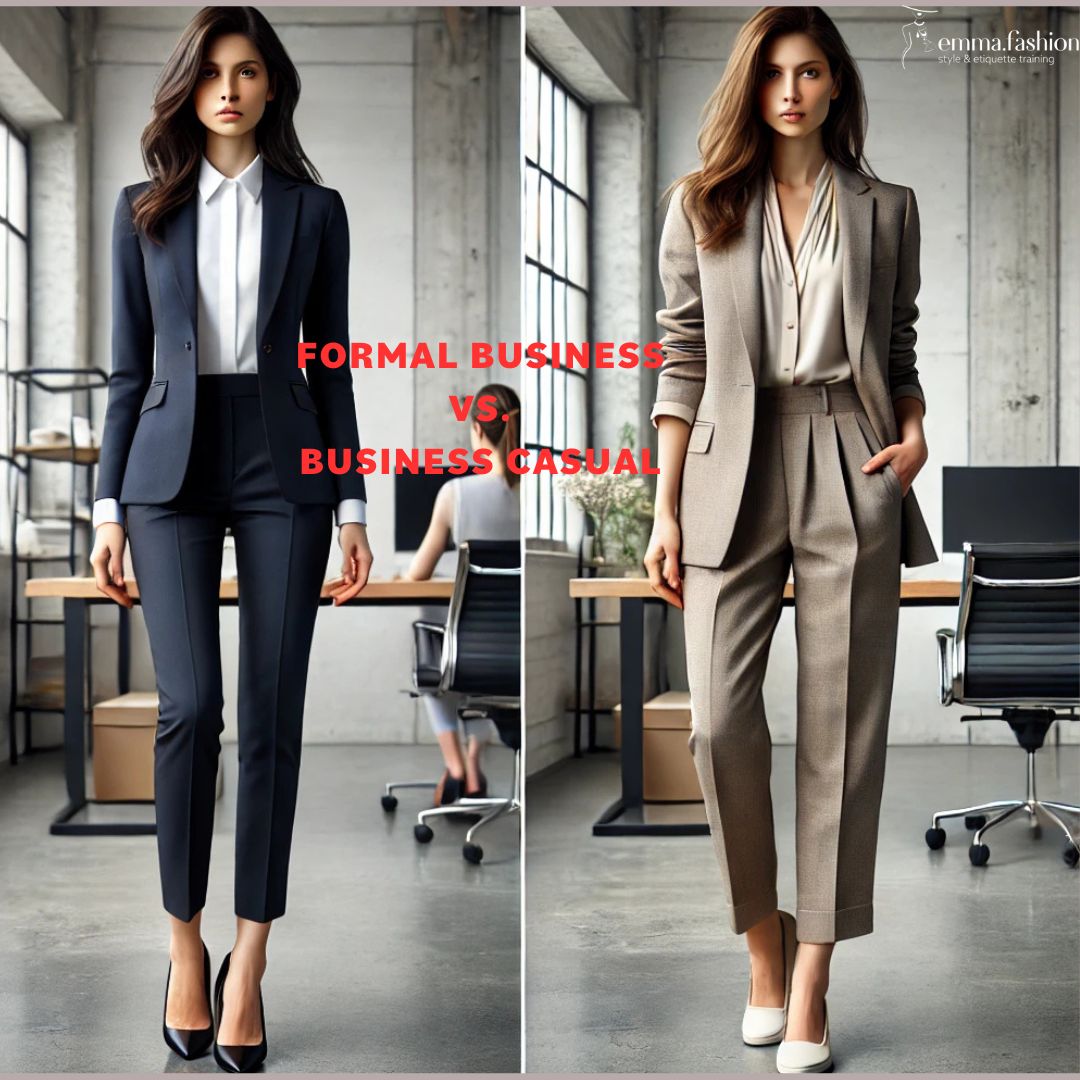
Formal business attire is the gold standard in professional settings, projecting authority and refinement. This is the dress code for board meetings, executive offices, and high-profile events.
How to Style It:
Women: A structured pantsuit or a knee-length skirt suit in neutral tones, paired with a blouse, closed-toe heels or elegant flats, and refined jewelry.
Etiquette Essentials:
- Always ensure your clothing is freshly pressed and spotless.
- Stick to classic, understated patterns—nothing too bold or flashy.
- Grooming matters! Neatly styled hair, polished shoes, and a professional demeanor complete the look.
2. Business Casual: Professional Yet Approachable
Business casual gives you the flexibility to look professional without the rigidity of a full suit. This is perfect for modern office environments, networking events, and work-related social gatherings.
How to Style It:
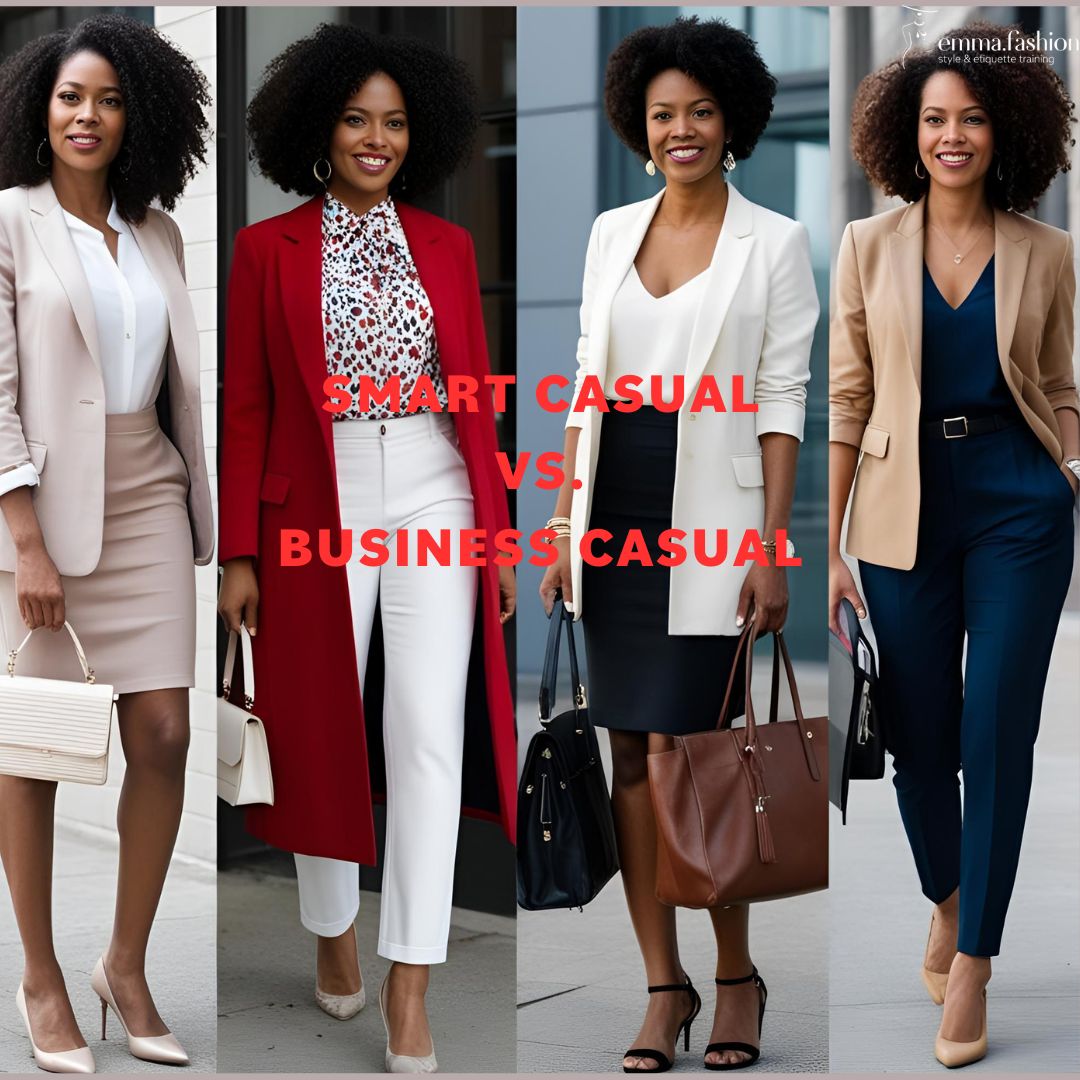
Women: Tailored trousers, midi skirts, or shift dresses paired with elegant blouses or knitwear. Footwear can range from chic flats to comfortable block heels.
Etiquette Essentials:
- Avoid overly casual pieces like jeans, sneakers, or graphic t-shirts.
- Stick to muted, professional colors but don’t be afraid of subtle prints or textures.
- Accessories should be tasteful—think leather belts, a structured handbag, or a sophisticated watch.
3. Smart Casual: Relaxed Elegance
Smart casual is the most versatile dress code, blending style and comfort. It allows for more personal expression while still looking polished. Ideal for casual Fridays, creative industries, and stylish social gatherings.
How to Style It:
Women: A flowy dress, tailored trousers with a chic blouse, or well-fitted jeans paired with an elegant top and ankle boots or ballet flats.
Etiquette Essentials:
- Aim for effortless sophistication—never too casual or too overdressed.
- Avoid overly distressed denim, flip-flops, or workout wear.
- Elevate the look with statement accessories, such as a stylish handbag, bold earrings, or a silk scarf.
Key Differences Between These Dress Codes:
- Formality Level:
- Formal Business: The most structured and professional.
- Business Casual: A balance between professionalism and comfort.
- Smart Casual: More relaxed but still intentional and stylish.
- Suit Requirement:
- Formal Business: A full suit is essential.
- Business Casual: No full suit needed, but polished attire is required.
- Smart Casual: No suits necessary; stylish layering is encouraged.
- Footwear Choice:
- Formal Business: Polished leather dress shoes or closed-toe heels.
- Business Casual: Loafers, chic flats, or classic pumps.
- Smart Casual: Trendy sneakers, stylish boots, or comfortable flats.
Dressing well is a form of self-respect. The right outfit not only helps you make a positive impression but also boosts your confidence. When in doubt, remember that it’s easier to dress down a formal outfit than to elevate an overly casual one—so always lean towards a polished look
Frequently Asked Questions
What is the difference between business casual and smart casual?
Business casual balances professionalism with comfort, meaning polished attire without a full suit, such as tailored trousers, midi skirts, or shift dresses with elegant blouses, and no jeans or sneakers. Smart casual is more relaxed but still intentional, allowing well-fitted jeans with an elegant top, trendy sneakers or stylish boots, and more personal expression.
What should a woman wear for formal business attire?
Formal business calls for a structured pantsuit or a knee-length skirt suit in neutral tones, paired with a blouse, closed-toe heels or elegant flats, and refined jewelry. Ensure everything is freshly pressed and spotless, stick to classic understated patterns, and remember that neat hair and polished shoes complete the power look.
Can I wear jeans to a business casual event?
No, jeans fall under the overly casual pieces to avoid for business casual, along with sneakers and graphic t-shirts. Well-fitted jeans paired with an elegant top belong instead to smart casual settings, such as casual Fridays, creative industries, and stylish social gatherings.
What should I do if I am unsure how formal an event will be?
When in doubt, lean toward the more polished option, because it is easier to dress down a formal outfit than to elevate an overly casual one. Dressing well is a form of self-respect, and the right outfit makes a positive impression while boosting your own confidence.
How do I keep a smart casual outfit from looking sloppy?
Aim for effortless sophistication that is never too casual or too overdressed, avoiding distressed denim, flip-flops, and workout wear. Elevate the look with statement accessories such as a stylish handbag, bold earrings, or a silk scarf.